How To
Current Deployments
The Radiant network currently runs two main deployments:
- CQDG QA – Managed by Ferlab
- AWS – Managed by CHOP
CQDG QA (Ferlab Managed)
Repositories:
- Apps Deployment: Ferlab CQDG Pre-Prod Environment (Airflow Config)
Parallelization via Custom Airflow Operator
The CQDG QA environment leverages KubernetesPodOperators within Apache Airflow to parallelize specific workloads.
This allows different jobs to run as individual Kubernetes pods, improving scalability and pipeline efficiency.
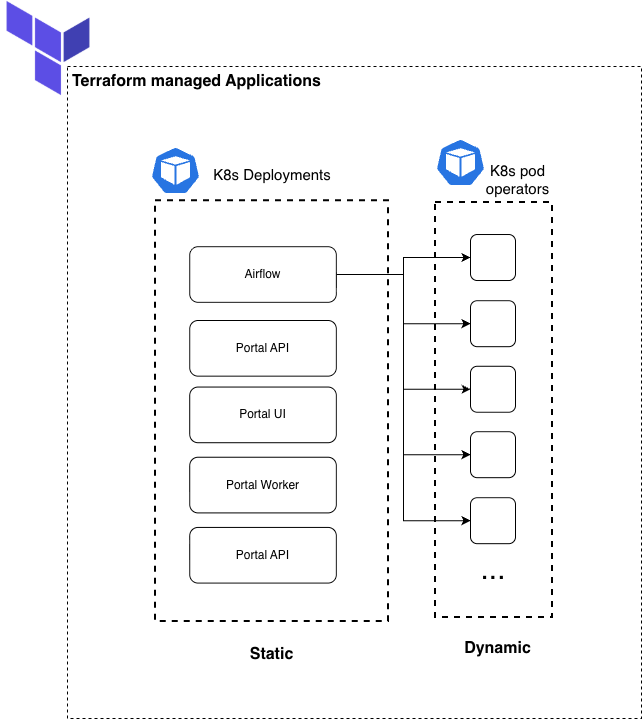
Parallel task execution is especially beneficial for VCF extraction.
A pod will be launched for each VCF file, allowing multiple files to be processed simultaneously, which significantly reduces overall processing time.
AWS (CHOP Managed)
Repositories:
- Terraform StarRocks Module: radiant-network/terraform-aws-starrocks-s3
- StarRocks Deployment: radiant-network/star-rocks
- Apps Deployment: radiant-network/radiant-portal-deployment
Parallelization via Custom Airflow Operator
In the AWS environment, Amazon MWAA (Managed Workflows for Apache Airflow) orchestrates workloads using a custom Radiant-Airflow Operator.
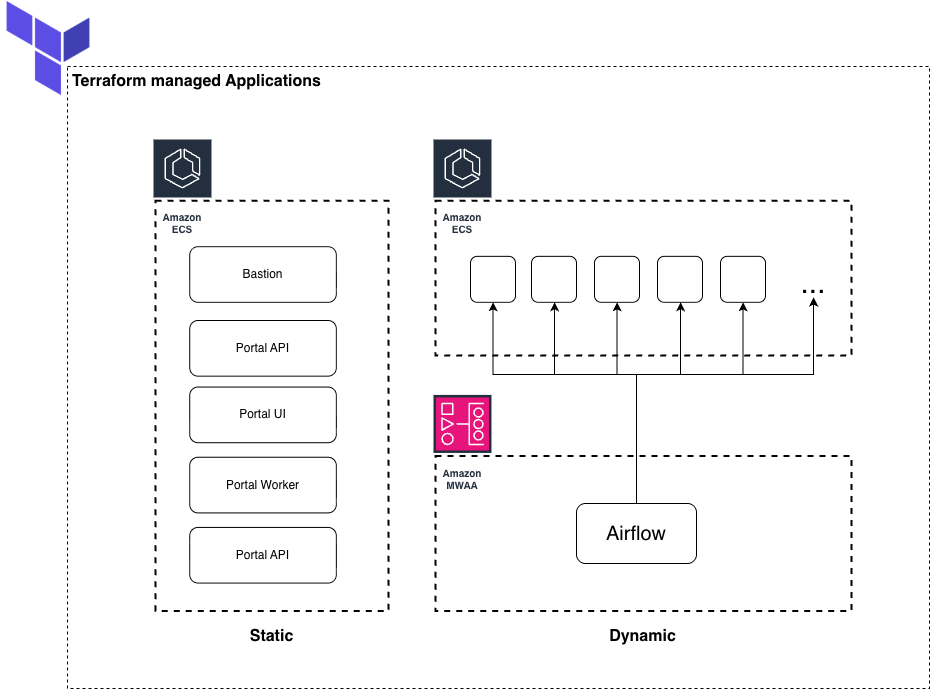
Tasks that benefit from parallel execution (e.g. VCF extraction) are deployed as ECS fargate tasks.
This behavior is similar to the KubernetesPodOperators used in CQDG environment.
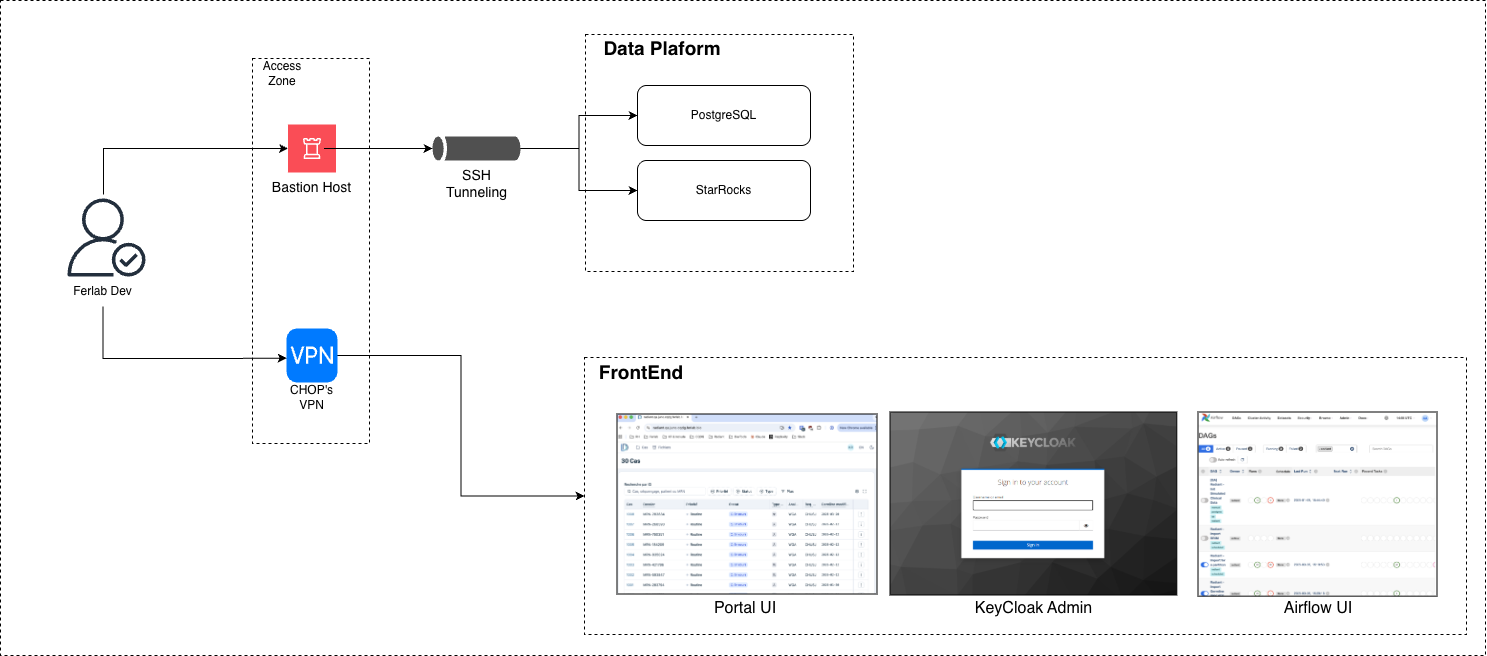
Accessing Applications on AWS
To access applications deployed in the AWS environment, users have two secure connection options:
- VPN Connection – Connect directly to the private network where the services are hosted.
- Bastion Host (SSH Tunnel) – Create an SSH-based tunnel through the bastion host to reach specific internal endpoints.
Use the method best suited for your workflow:
- The VPN connection is ideal for interactive tools such as the Airflow UI.
- The SSH tunnel via Bastion is commonly used to connect to backend services like the StarRocks FE node for data exploration.